Marketing Strategies for Home Builders: What Works, What to Try and How to Plan It
What are the best marketing strategies for home builders?
Decide who you build for. Document every build from contract to move-in, give each project a page with real specifics, and make sure buyers can find it through your Google Business Profile, reviews and website. Keep architects, designers and past clients close, because they send the best work. Then measure what brought each buyer in and let that decide what you make next.
That is the short version. Here is each piece, followed by ideas you can use this month and a plan that fits on one page.
Start with who you build for
Every strategy below works better when it is aimed at someone. "People who want a house" is not a market. A custom builder usually does best with one or two of these:
Owners with land. They already have the lot and need someone to build on it. They search for builders by town and compare portfolios closely.
Move-up buyers. Growing families who want a specific school district or neighborhood. Timeline and process matter most to them.
Downsizers and empty nesters. They want less house but better finishes, often single-level, often near where they already live.
Second-home buyers. Coast, lake or mountain. Often out of town during the build, so they need to trust how you communicate.
Architect-led projects. The architect is often the one choosing the builder. Your reputation with architects is the marketing.
Pick the one or two you want more of. Then choose the projects you document, the pages you write and the referral partners you spend time with based on that choice.
Eight marketing strategies for home builders
1. Document every build from contract
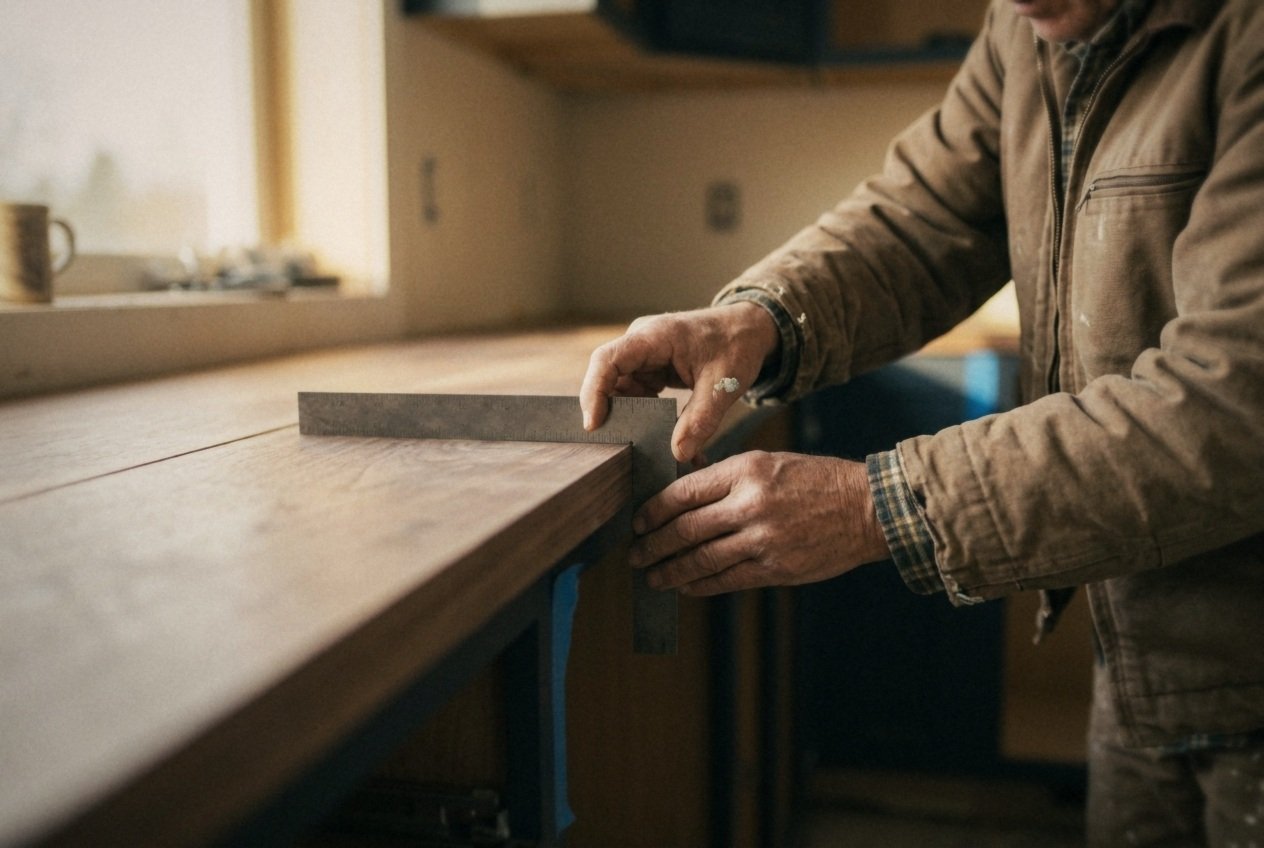
The moments that show how well a house was built are visible for weeks, not months. Framing and rough-in get closed up. Millwork looks best before paint. The finished, empty house exists for a few days before the owners move in. If nobody is scheduled to capture each stage, it's gone.
Plan the documentation when the contract is signed, and agree with the owners in writing on how the home can be shown. One well-documented house gives you a project page, a walkthrough video, short clips, stills for your profile and an answer for every sales meeting for years.
2. Give every project its own page
A gallery of finished rooms says you build nice houses. A project page says how. For each project, write down the town or neighborhood, the architect, the scope, what the site demanded and how you handled it, and the timeline. Plain sentences. That is what buyers read, and it is what Google and AI search tools read too.
3. Get found where buyers search
When someone starts looking for a builder, they search the town and look at the map. Your Google Business Profile decides whether you are on it. Choose the most specific category (Custom home builder, not General contractor), set your service area to the towns you actually build in, and keep adding real project photos.
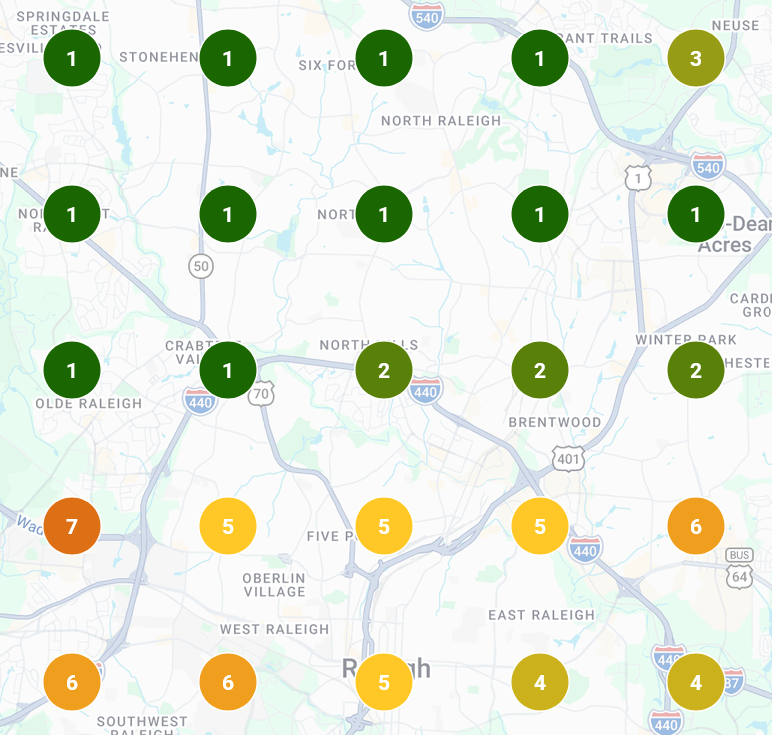
Then build a steady flow of reviews. Ask at the final walkthrough or in the first month in the house, and answer every review within a couple of days. Recency matters as much as the total. More on this in SEO for home builders and why a builder doesn't show up in local search.
4. Work the referral network on purpose
Architects, interior designers, real estate agents, land brokers and lenders all meet buyers before you do. Most builders treat referrals as luck. They work better as relationships you keep up.
Share your documentation of a finished project with the architect and designer who worked on it, with their names on it. Credit them on your project page and link to their sites. A designer with good photos of your house in their own portfolio is a designer who says your name.
5. Keep past clients close
Your past clients are your best salespeople, and most builders lose touch with them the week they hand over the keys. Go back a year after move-in to photograph the house with the landscaping grown in. Ask for a review then if you didn't get one. With the owners' permission, a finished home is also the best showroom you have, for an open house, a Parade of Homes entry or a private tour for a serious buyer.
6. Answer buyer questions in writing
Buyers research long before they call. How long does a custom home take? What does it cost per square foot in this area? Can you build on land I already own? What happens if the budget moves? Write a plain answer to each, with the question as the heading. Those pages bring in buyers who are already serious, and they are what ChatGPT and Google's AI answers quote when someone asks who to hire.
7. Connect sales and marketing
For most builders, sales and marketing are the same two or three people. That makes them easier to connect, not harder.
Give sales something to send. A project page and a walkthrough video for the kind of house a buyer is asking about does more than a brochure.
Answer inquiries the same day. A buyer who contacts three builders often goes with the first one who calls back with something useful.
Ask every buyer how they found you, and write it down. That one habit tells you more about your marketing than most reports.
Keep every inquiry in one place. Many builders use the CRM built into their project management software. A spreadsheet works if it is kept up.
8. Measure what brought each buyer in
Once a month, look at four things: profile actions (calls, website clicks, direction requests), which searches brought people to your site, which pages they landed on, and which projects and videos they actually watched. Then let that decide what you shoot and publish next. If the stair detail holds people longer than the aerial of the roofline, the next house gets more time on details.
This is the step most builders skip, usually because the person who makes the content and the person who reports on it never talk.
Home builder marketing ideas you can use this month
Photograph a house in framing this week, before it closes up.
Write one project page with the town, the architect and what made the site hard.
Go back to a house you finished last year and shoot it with the landscaping grown in.
Send the architect on your last project a set of finished photos with their name on them.
Add five recent project photos to your Google Business Profile.
Ask your three most recent clients for a review.
Turn the question buyers ask most in sales meetings into a page on your site.
Cut a 30 second clip of one detail your crew is proud of: a stair, a beam, a built-in.
Search your own business name and phone number, and fix every listing that doesn't match.
Add "how did you hear about us?" to your contact form and your first call.
How to write a home builder marketing plan
A home builder marketing plan should fit on one page. Answer six questions:
Who do you want more of? One or two of the buyer types above.
Which houses will you document this year? Pick the ones that best show the work you want more of, and put the milestone dates on the calendar now.
Where will each project live? A project page first. Then your profile, YouTube, Instagram and anything you send in sales, each pointing back to the page.
Who refers you? List the architects, designers, agents and past clients. Plan one reason to be in touch with each every quarter.
What will you publish each month? One project, released in pieces over several weeks, is enough for most builders.
What will you measure? How each buyer found you, profile actions, and which pages and videos get used. Look monthly, change course quarterly.
A year of that plan looks like this:
Quarter 1: Fix the Google Business Profile, listings and site basics. Publish your strongest finished project as a full page.
Quarter 2: Document a build in progress. Share finished files with the architect and designer on the last one.
Quarter 3: Publish the next project. Revisit a house from last year. Ask every recent client for a review.
Quarter 4: Read the year. Keep what brought buyers in, drop what didn't, and choose next year's houses.
What marketing tools do home builders need?
Fewer than most software lists suggest. The ones that matter:
Google Business Profile, free, and for most builders the first place a local buyer sees them.
Google Search Console and Google Analytics, free, to see which searches and pages bring people in.
A CRM or inquiry log, often the one in your project management software.
A website you can update yourself, so a new project page doesn't wait on a developer.
Someone who can shoot, because every other tool on this list needs good photographs and video to work with.
What this looked like for a Raleigh builder
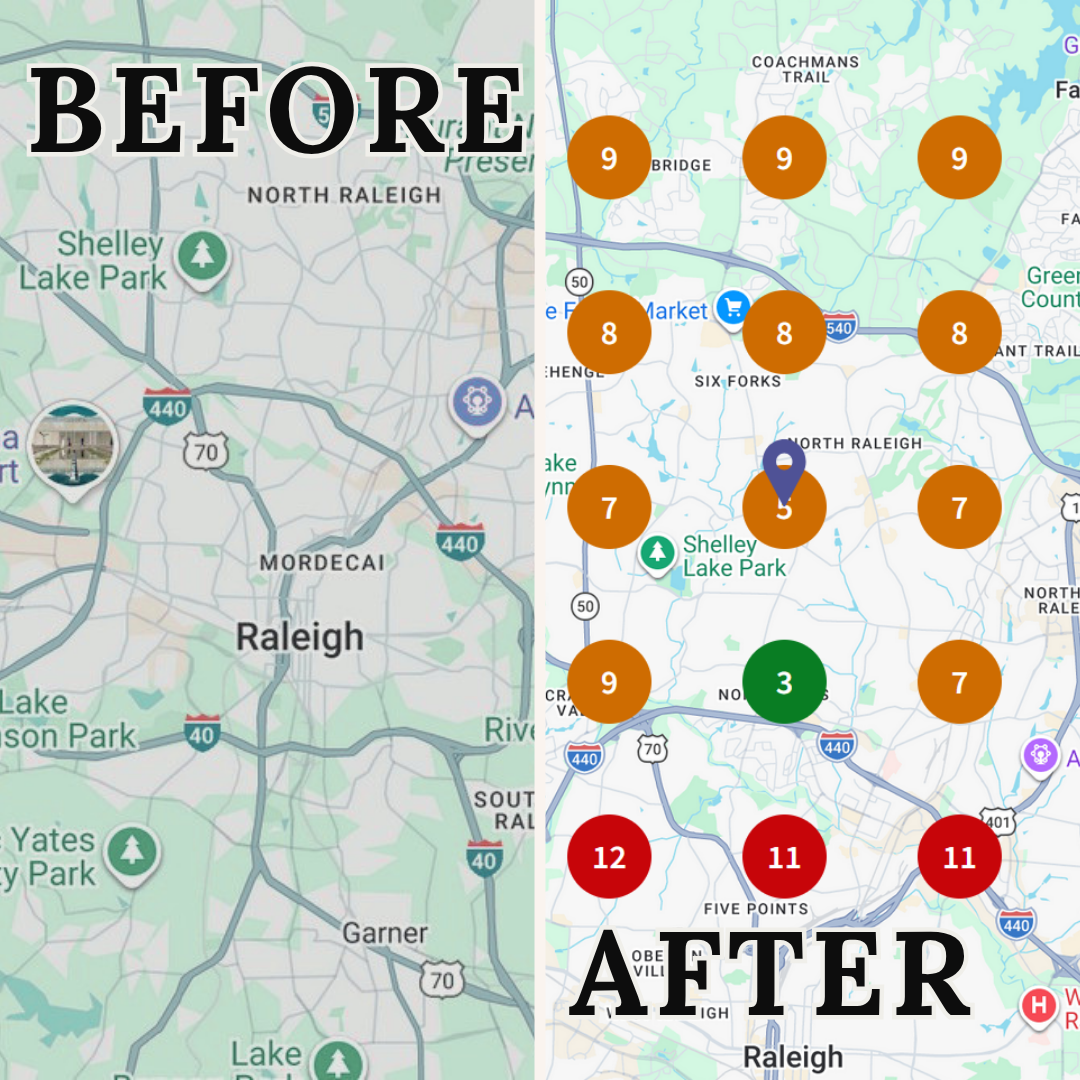
When we started with Tobacco Road Custom Builders in January, they had no Google Business Profile at all. Not a neglected one. None.
Top 3 in the local Map Pack within 30 days, from a profile that did not exist in January
650 buyers found the profile and 177 took action through calls, clicks and direction requests. A 27% action rate.
Website traffic up 43% year over year
Search visibility went from 4 indexed terms to 41
13 new five-star reviews, with no advertising spend
The profile was the fast part. The project pages and footage are what people land on once they find it. Read the full case study, or see how we approach marketing for custom home builders.
Home builder marketing FAQ
What is the difference between a marketing strategy and a marketing plan?
The strategy is who you build for and how they will find and choose you. The plan is what you will actually do this year, quarter by quarter, to make that happen. Most builders need the plan more, because they already know the strategy.
How long before builder marketing shows results?
It depends on the market and where you start. A Google Business Profile can move within weeks. Project pages and documented work take months to build and to rank, and they keep working for years after.
Should home builders run paid ads?
Ads can run alongside this, but they stop when the budget stops. A profile, reviews, project pages and documented work keep working. For most custom builders we would build those first.
Do custom home builders need social media?
It helps, mostly as a place to release pieces of a documented project and keep past clients and referral partners seeing your work. It works best when every post points back to a project page on your site.
What is the most overlooked builder marketing strategy?
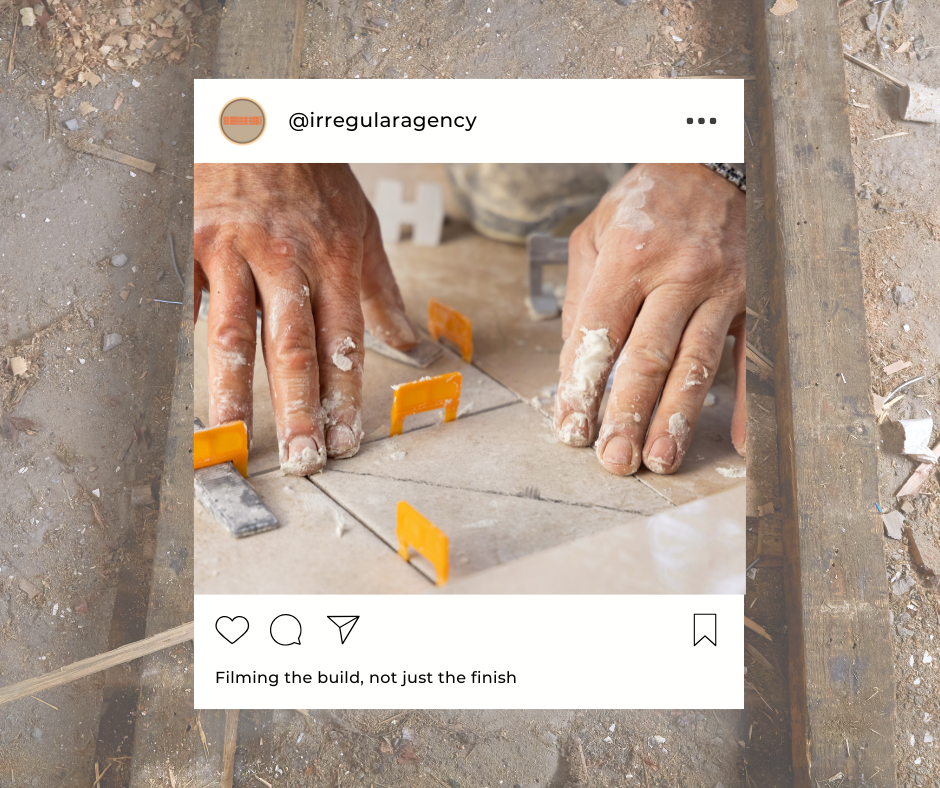
Documenting the build while it happens. Most builders photograph the finished house once and lose everything that showed how it was built.
About the author. Kent Belle is the founder of Irregular Agency in Raleigh, NC. He spent more than a decade at Ferguson Enterprises working on how building products get talked about, with senior production credits on national broadcast campaigns.
Tell us about your next build. Start a conversation.