
What are the best marketing ideas for bathroom remodelers?
Photograph every bathroom before demo and after, from the same spots. Give each finished bathroom its own page, and keep your Google Business Profile full of real job photos and recent reviews. Reach the neighbors of every job, stay in touch with past clients, and answer the questions homeowners search before they call. Then track which of those brought in each inquiry.
Here are fifteen ideas, grouped by what they do.
Capture the work
1. Shoot the before from the same spots as the after
Before and after is the most persuasive thing a bathroom remodeler has, and it only works if the before exists. Pick two or three camera positions before demo, mark them, and shoot the finished room from the same places. For the full process, see how to document a remodel.
2. Capture the parts nobody sees
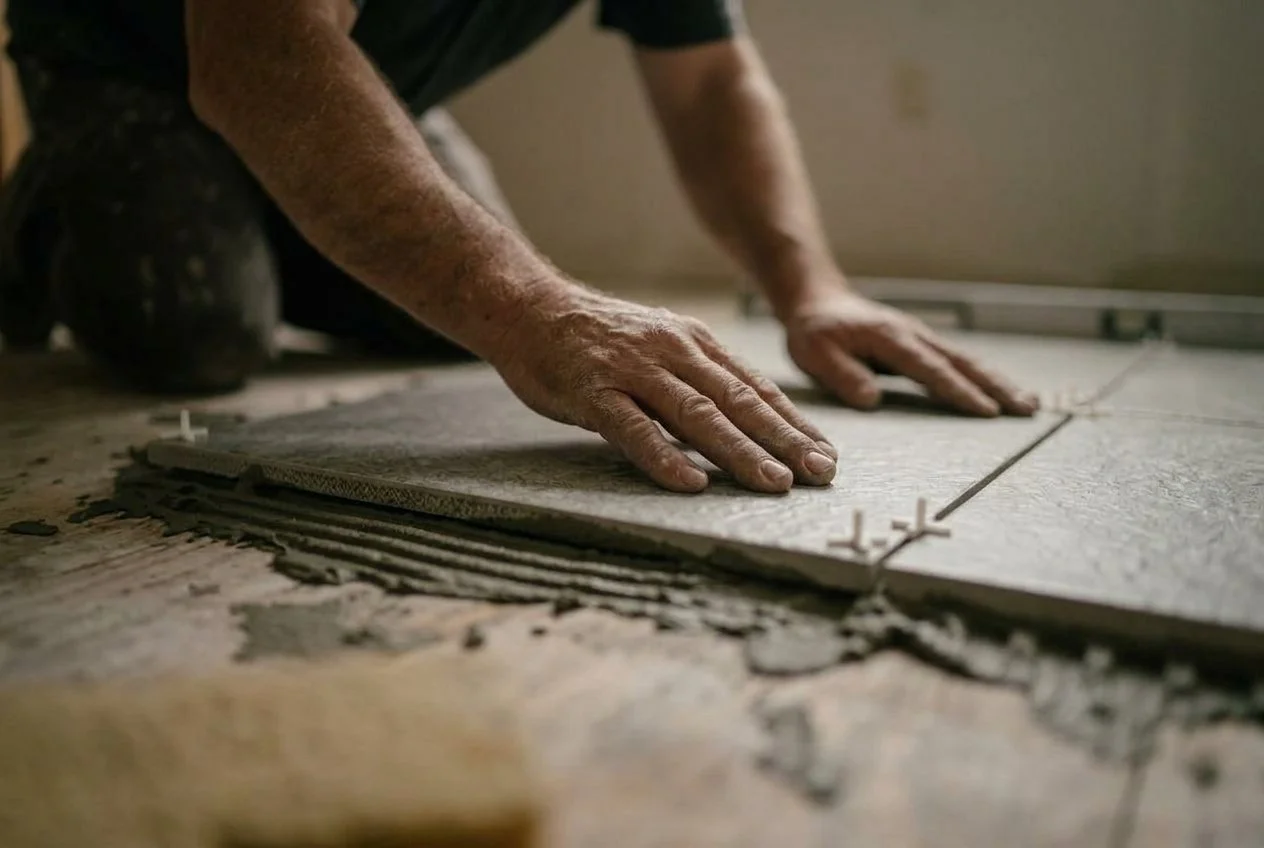
The waterproofing, the shower pan, the blocking for grab bars, the new subfloor. These are what separate a good bathroom remodel from a bad one, and they are covered within days. A few photos of each one show a homeowner why you cost what you cost.
3. Shoot the finished room in good light
Bathrooms are small and often windowless, which makes phone photos look worse than the room. Clear the counters, turn on every light, shoot from the doorway and from inside, and take close shots of the tile, the fixtures and the niche.
4. Make a short walkthrough video
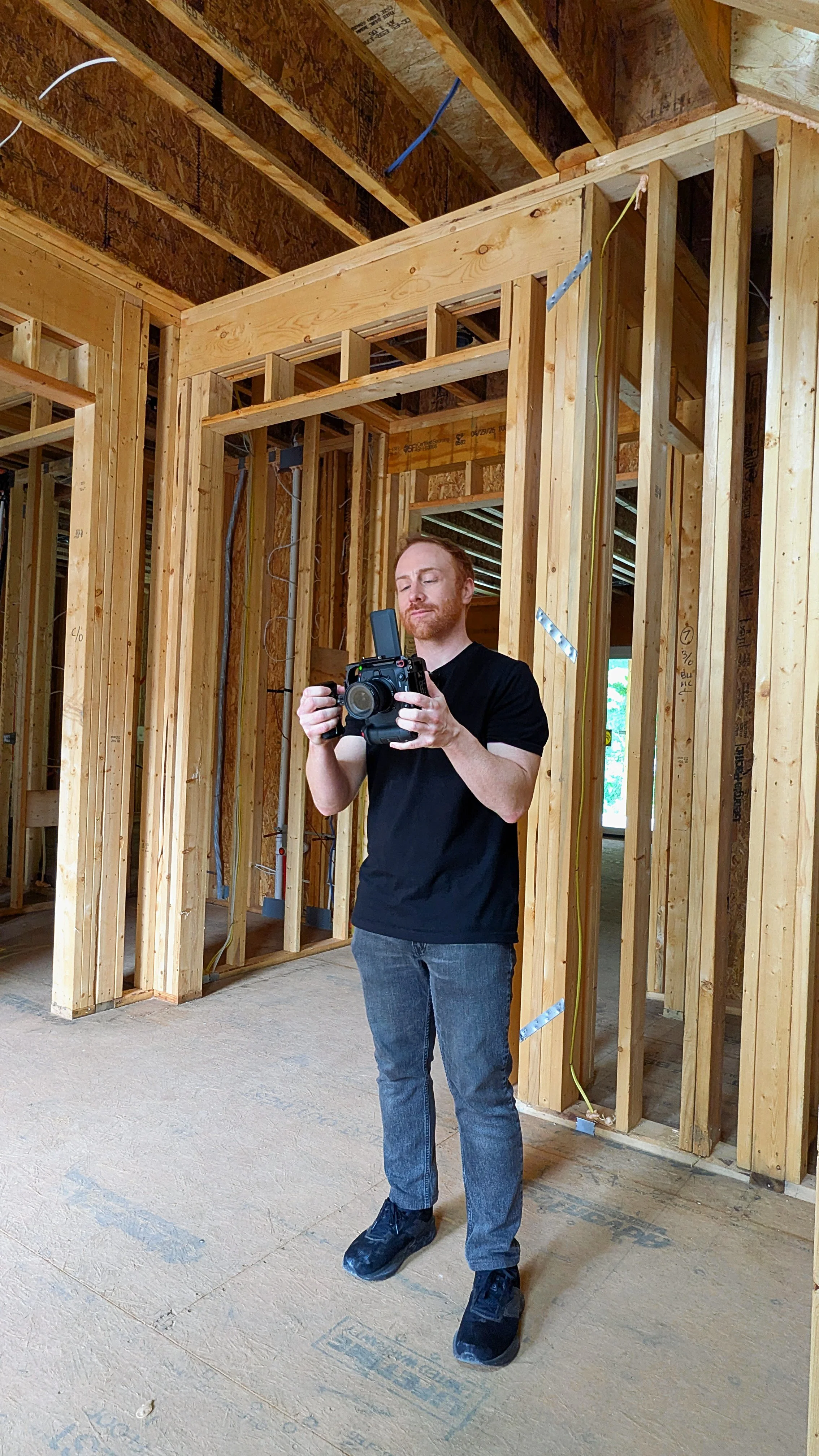
Thirty seconds from the doorway to the shower, one continuous move. It shows the room the way a homeowner will experience it, and it travels further on social than a still.
Publish it where homeowners look
5. Give every bathroom its own page
Homeowners search "bathroom remodel" plus their town. A page for each finished bathroom, with the before, the after, the town and a plain description of what changed, gives that search somewhere to land. A gallery of twenty untitled bathroom photos does not.
6. Write down the decisions
On each page, say what the homeowner wanted, what the old room was like, and why you made the choices you did: the curbless shower, the larger tile, the moved toilet. That is what a buyer reads, and what search engines and AI tools can quote.
7. Answer the questions people search
How much a bathroom remodel costs in your area. How long it takes. Whether a tub-to-shower conversion is worth it. Whether you can keep using another bathroom during the work. Each answer is a page someone can find.
Get found locally
8. Fill your Google Business Profile with real bathrooms
Add photos from every finished job, keep your services list specific (bathroom remodeling, tub to shower conversion, accessible bathrooms), and set your service area to the towns you actually work in. More on this in SEO for remodelers.
9. Ask for a review at the final walkthrough
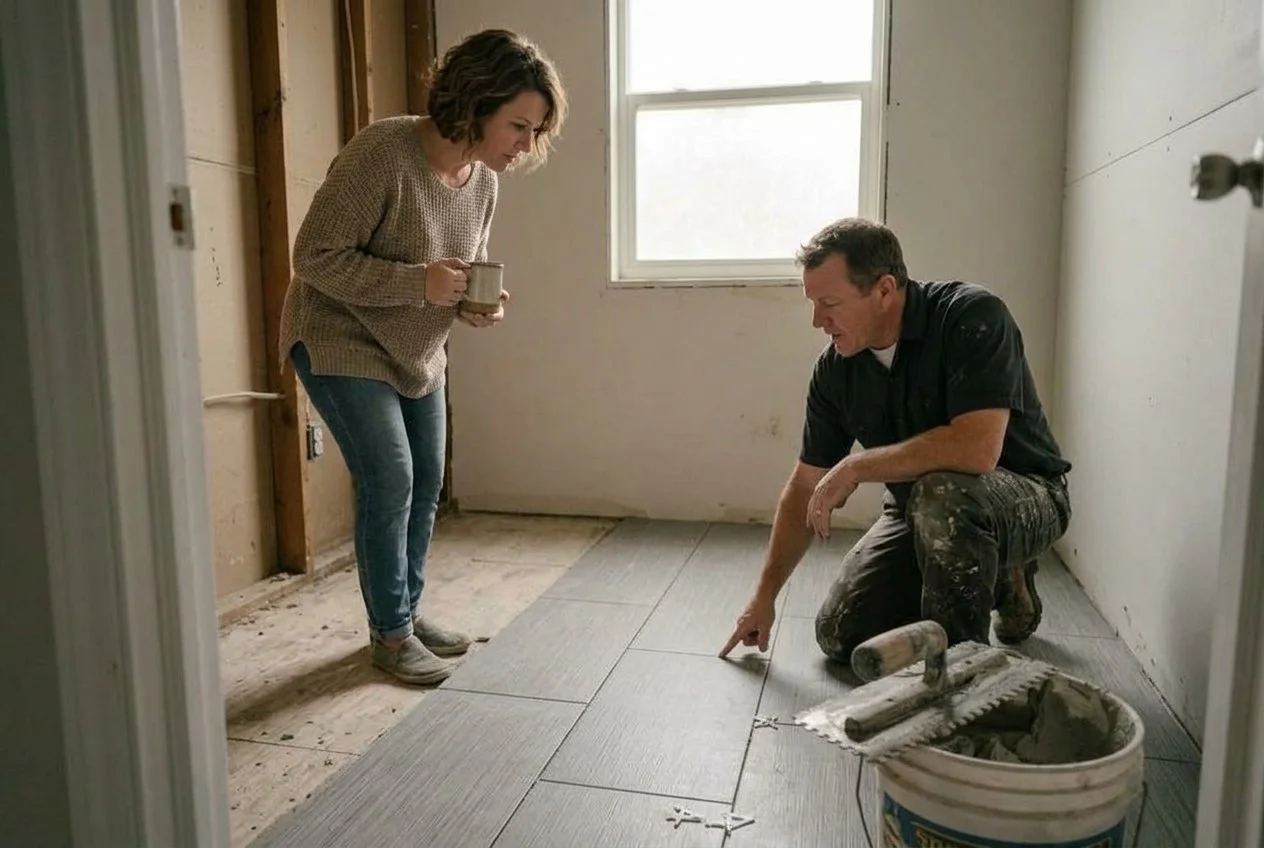
That is when the homeowner is happiest. Ask in person, send the link the same day, and answer every review within a couple of days. Bathroom jobs are short, so you have more chances to build a steady flow than most trades.
Reach the neighbors and past clients
10. Put up a yard sign during the job
With the owner's permission. The neighbors have been watching your trucks for weeks. A sign tells them who did it.
11. Send the neighbors a card when it is finished
One postcard, one photo of the finished bathroom, one line about the job. It reaches the people most likely to call next.
12. Stay in touch with past clients
Most homeowners remodel more than one room. A short email when you finish a project nearby, or a seasonal note, keeps you in mind for the kitchen next year and the friend who asks who did their bathroom.
13. Share your work with designers and realtors
Interior designers and real estate agents are asked for remodeler recommendations all the time. Send them finished photos with their names on any project they were part of.
Know what works
14. Ask every caller how they found you
Write it down. After a few months you will know whether the profile, the yard signs or the referrals bring in the work.
15. Look at the numbers once a month
Profile calls and website clicks, which bathroom pages people land on, and which searches bring them in. Put more into what works and stop what doesn't.
Where to start
If you do only one thing this month, shoot the before on every bathroom you start, from the spots you will use for the after. Everything else on this list depends on it.
For the bigger picture, see our home remodeling marketing strategy, or how we work with remodelers, including kitchen and bathroom remodelers.
Bathroom remodeling marketing FAQ
How do bathroom remodelers get more clients?
Mostly through referrals, neighbors and local search. Someone who hears your name looks you up, so the photos, reviews and job pages they find decide whether they call.
Are before and after photos really that important?
Yes. A finished bathroom looks like every other finished bathroom. The before is what shows what you actually did.
Should bathroom remodelers run ads?
They can, but ads stop when the budget stops. A full profile, recent reviews and a page for every bathroom keep working. Build those first.
What should a bathroom remodeling website include?
A page for each finished bathroom with before and after photos, a plain answer to cost and timeline questions, the towns you work in, and an easy way to get in touch.
About the author. Kent Belle is the founder of Irregular Agency in Raleigh, NC. He spent more than a decade in building products and construction marketing, with senior production credits on national broadcast campaigns.
Tell us about your next bathroom before it goes to demo. Start a conversation.