What a Home Builder Marketing Agency Actually Does
A marketing agency for home builders ensures that your work comes before the people who are deciding on which builder to hire. In reality, this involves three main tasks: properly documenting your projects, making sure they appear when someone is looking for a builder, and maintaining the completed homes so that they continue to function for you after the closing has taken place.
That's the brief account; the more detailed one is important to know since the term applies to a wide variety of companies and most of the builders who employ one don't know what they should be getting.
Why builders need something different
Choosing a custom home is a lengthy process. Buyers spend months researching before making the first contact. They look at your completed houses to see how the kitchen was put together, how the light falls throughout the day, and whether the trim holds up in a close-up view. They also consider where you build and with whom you have built. Only when they call have they generally decided if you're on their list.
Most general marketing agencies regard a builder in the same way as they do any other local service business, by allocating an ad budget, setting a posting schedule, and preparing a report on clicks. This approach fails to take into account the actual process by which a sale is made. A builder's most effective form of marketing is the house itself, and the agency's responsibility is to ensure that the house is seen.
Job one: capturing the work
The gap is the same for most builders. Once the house is completed, the team moves on and all that remains are a few phone photos or a single afternoon's worth of shots for the listing. A year later the best house you've built is still doing very little for you.
An agency that focuses on builders keeps records of the work throughout the entire life of the project, not just when the property is ready for viewing. This typically involves:
Finished homes, photographed and filmed with the light and timing planned, not whatever the day happened to give you
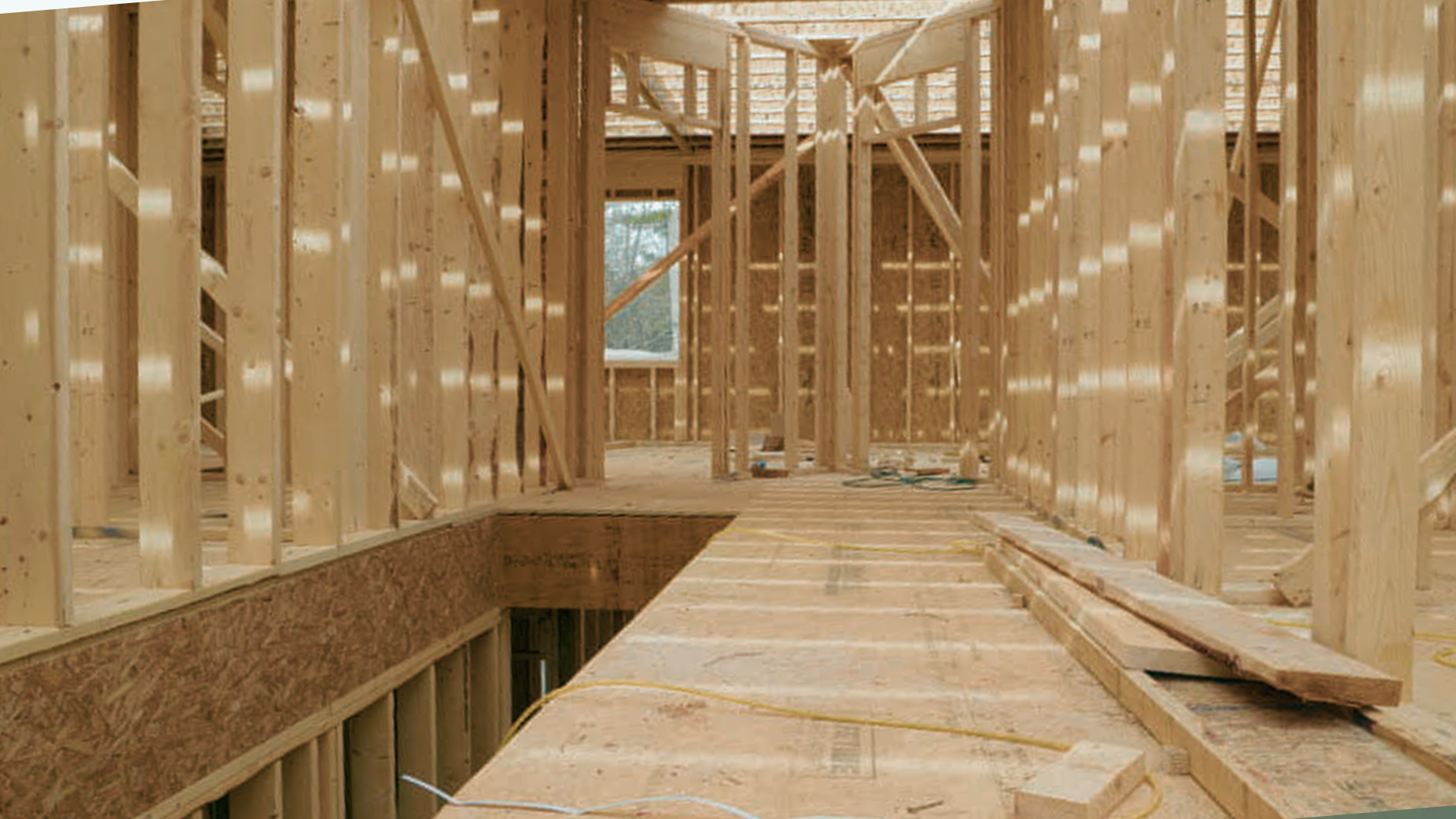
Work in progress: the framing, the structure before it's closed up, the details that disappear once the drywall goes on
Your team and your trades, the people a buyer will spend a year with
Detail work: millwork, stone, joinery, the things that separate a custom home from a production build
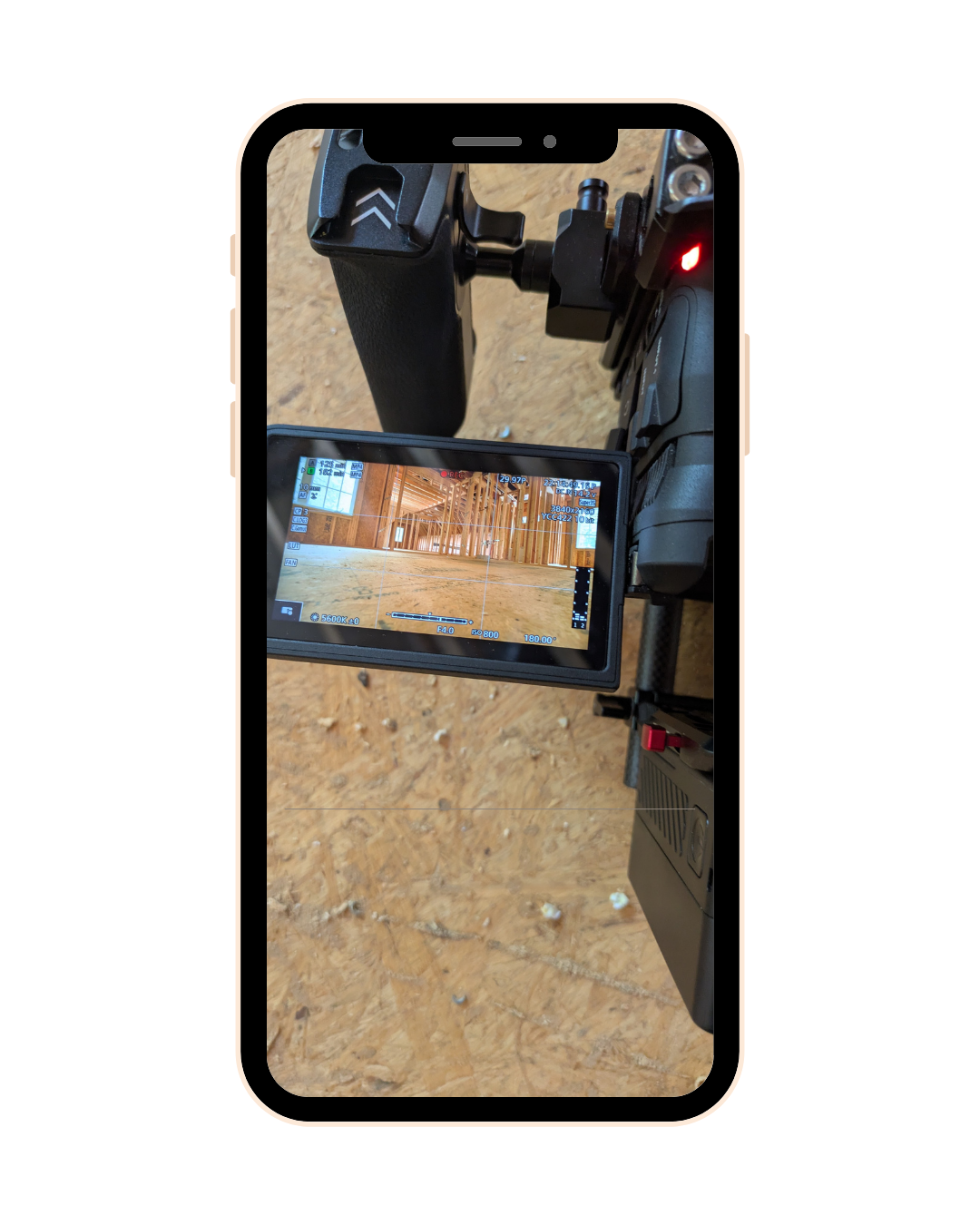
Irregular Agency on a job site capturing a build in progress
The contrast with hiring a photographer for a day lies in the element of continuity. Documentation that is carried out throughout the entire year creates a library, and it is this library that all other aspects make use of. You can see how our documentation is built upon the video page.
Job two: getting it found
Footage which no one sees is a cost, and the next thing to do is to make sure that people find your work when they are looking for a builder.
That covers three areas:
For local searches, your Google Business Profile and your appearance in the local search results will make sure that when someone in your area looks for a custom builder they see your business, along with your projects and your reviews.
The website itself should have project pages indicating the location of the home, the scope of the project, and the name of the designer; it should also include pages for the towns and neighborhoods that you create, with titles, an appropriate structure, and a technical configuration that enable Google to read all of it.
Nowadays, more buyers are using ChatGPT, Perplexity, or the AI features of Google to find out which builders to consider. These tools obtain information from web pages that clearly state the type of property being built and the location. A website that has only three sentences of text and a photo gallery provides them with no useful information.
What people end up with is the material produced in the first instance, which is why the two aspects go hand in hand. If there is searching but no good work to back it up, people are directed to bare pages. On the other hand, if there is good work but no search, it will remain in a folder.
Job three: keeping the work working
A finished home keeps its value long after the walkthrough, if someone keeps it in front of the right people:
Buyers who are still researching
Past clients, who send more work than any ad
Designers, architects and trades who recommend builders to their own clients
Your own sales meetings, where a walkthrough film says more about your process than a description of it
It is here that most builders lose out on value; the house is shot, posted only once and then ignored. A house that you completed two years ago should still appear in search results on your website, in the portfolio that you send to an architect, and in the discussions with a buyer who is comparing you to two other builders.
Where the website fits
Most building agencies produce websites, and often do so as their main offering. A new website may be appropriate, particularly if the existing one is slow, can't display a genuine project portfolio, or has no pages search engines can use.
It isn't always the correct decision. If your site is up to standard but has nothing good on it, rebuilding it means spending money in the wrong place. A reliable agency will tell you what you're dealing with. They offer their services when the site is the reason the work can't be seen.
What a home builder marketing agency doesn't do
If you know this at the start, you'll avoid frustration later on.
It won't replace referrals since, for most custom builders, recommendations are still the main source of business. When people look you up, effective marketing provides them with something to find.
Selling the house isn't the agency's responsibility; your team handles that. The agency ensures that when the buyer enters the conversation, they already know about your work.
We can't say how many calls there will be. No one can predict how many people will ask about a custom home in a particular month. Be cautious of anyone who promises a number.
It shouldn't depend on volume. Trying to post every day and running wide ads seldom matches the needs of a builder who builds ten or twenty houses each year.
One partner or three vendors
Many builders end up with a kind of patchwork arrangement, using a videographer for one job, a search company that has never seen any of your houses, and a web designer every few years. Each one does their part, but none communicate with each other, and none understand how a custom home is sold.
The argument in favor of a single partner is straightforward: the footage is used for the search operation, the search operation in turn sends people to look at the footage, and the site itself holds both the footage and the search data. When a single company carries out all these tasks, there is nothing that ends up on a drive waiting to be used by someone else.
What a month usually looks like
It varies by builder, but a typical month includes:
A plan: what gets documented, what gets published, what gets fixed first
Time on site capturing current projects
New project content published to your site and profiles
Search work: pages, profile updates, technical fixes
A plain report on where things stand
It all depends on you; if your search presence is strong but the work isn't being documented, then documentation should come first, and if you have a lot of footage stored somewhere that is not being seen, then the work begins with where it is stored and why no one is seeing it.
What this looks like in practice
For Tobacco Road Custom Builders in Raleigh:
Top 3 in the local Map Pack within 30 days, from a Google Business Profile that didn't exist in January
650 buyers found the profile and 177 took action, a 27% action rate
Website traffic up 43% year over year
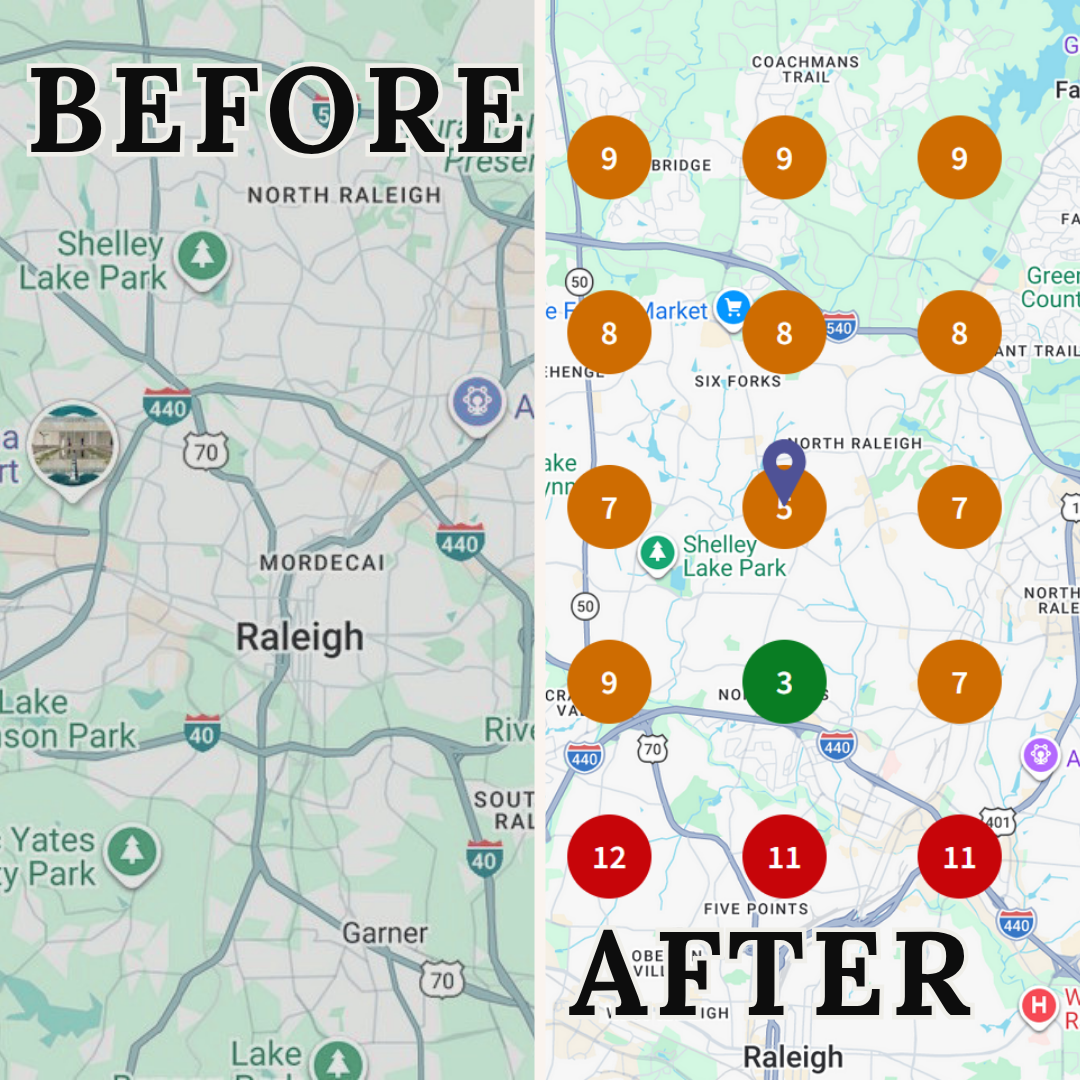
Tobacco Road Map Pack Ranking
Home builder marketing agency FAQ
What is the role of a home building marketing agency?
It keeps records of your projects, ensures they appear in Google and AI searches, and shows your completed homes to buyers, past clients, and referral partners over time.
What is the difference between hiring a photographer?
On one day, a photographer takes pictures of a completed house. An agency, on the other hand, documents projects throughout the year, publishes the work, and runs the search so people can find it.
Do smaller builders need an agency?
A builder who completes five houses each year has fewer projects to show off, so each one matters more. What matters more is whether the work is documented and easy to find.
Does a marketing agency for home builders construct websites?
Most do, and so do we; we agree only when the website is the reason the work cannot be seen, not as a matter of course.
How long before search results show up?
It depends on your market and where you're starting. Local profile results can move within weeks. Organic rankings for competitive terms usually take months.
Do you work outside Raleigh?
Yes. We work with builders across North Carolina and the Mid-Atlantic.
See how we handle marketing for custom home builders, or tell us about your next build.